
- 11Done
- June 29, 2026
- Safety Guides
How to Get a Gas Safety Certificate: A P...
A single missed deadline could cost you £30,000 in civil penalties and void your property insurance. Managing compliance often feels like a constant battle against ticking clocks and hidden fees. You want your tenants safe and your paperwork sorted. You don't want the headache of vetting engineers or haggling over repair quotes. Learning how to get a gas safety certificate shouldn't be a complex ordeal. It should be a simple, transparent task that fits into your schedule without any friction.
We've streamlined the entire process to help you secure your CP12 certificate quickly and with total price certainty. By following our pragmatic approach, you can eliminate the anxiety of failing inspections and ensure your property remains fully compliant. This guide breaks down the updated legal requirements for 2026. We'll show you exactly how to find vetted Gas Safe registered professionals who value your time. You'll also learn how to maintain digital records that protect your investment and keep your tenants safe. It's about getting the job done right the first time. Let's start with the essentials of compliance.
Key Takeaways
- Master the legal essentials of the CP12 to ensure your property remains compliant and your tenants stay safe.
- Follow our pragmatic guide on how to get a gas safety certificate quickly using vetted, Gas Safe registered engineers.
- Identify all gas appliances and clear access routes before the inspection to avoid delays or failed visits.
- Understand the difference between a pass, a fail, and NCS ratings to manage remedial actions effectively.
- Leverage fixed-price certainty and digital records to remove the stress of hidden costs and manual paperwork.
Understanding the Gas Safety Certificate (CP12) Requirement
The Landlord's gas safety certificate, often called a CP12, is a non-negotiable legal document. It proves that every gas appliance, flue, and pipe in your rental property is safe to use. This isn't a suggestion. It is a mandatory requirement under the Gas Safety (Installation and Use) Regulations 1998. Landlords must secure a new certificate every 12 months. This process ensures that boilers, hobs, and gas fires are functioning correctly without leaking dangerous fumes or wasting energy. The inspection is thorough. It covers gas pressure, ventilation, and the physical integrity of the pipework throughout the entire building.
Learning how to get a gas safety certificate is vital for protecting your tenants and your business. The legal stakes are high. Beyond the risk of unlimited fines, you also lose the right to serve a Section 21 eviction notice, making property management significantly harder. In extreme cases of negligence where a tenant is harmed, imprisonment or manslaughter charges are real possibilities. Compliance is the only way to operate safely and legally in the UK rental market. It provides a clear, documented audit trail that proves you have met your duty of care and prioritised safety above all else.
Legal Obligations for UK Landlords in 2026
Knowing how to get a gas safety certificate is just the first step; administrative compliance is equally important. You must give existing tenants their copy within 28 days of the inspection. New tenants need theirs before they move in. Keep all records for at least two years. Thanks to the 2018 amendment, you can book your check up to two months early whilst retaining your original expiry date. This prevents last-minute panics and ensures you never miss a deadline or leave your property uninsured.
Why Homeowners Should Consider Annual Checks
Private homeowners aren't legally bound by these rules, but the risks are identical. Carbon monoxide is odourless and deadly. A professional check is the only way to find leaks early. It also protects your insurance. Most providers expect regular maintenance to be carried out. Without proof of a check, a claim following a fire or boiler explosion could be rejected. It is a pragmatic move for any household seeking total peace of mind and long-term appliance efficiency.
Preparation: What You Need Before Your Inspection
Efficiency is the priority. Success starts with organisation. Don't wait for the engineer to arrive to start looking for your gas meter or boiler cupboard keys. Efficient preparation reduces the time spent on-site and prevents failed inspections. Understanding how to get a gas safety certificate involves more than just booking an appointment; it requires active preparation. A clear property means a faster report and a smoother experience for your tenants.
By organising your paperwork and clearing access routes before the engineer knocks on the door, you eliminate the friction that often leads to aborted visits and extra call-out fees. The goal is to move from the booking to the certificate with zero complications. Follow these practical steps to ensure your property is ready for a professional review.
Identifying Your Gas Appliances and Flues
Start by listing every gas-burning appliance in the building. This typically includes the boiler, gas hob, oven, and any gas fires. Don't overlook the hidden items. Check the loft space for flues or older water heaters that might still be connected to the supply. Look for signs of trouble. Soot marks, scorching around burner ports, or a pilot light that frequently goes out are red flags. Identifying these issues early helps you anticipate potential remedial work and ensures the engineer can work systematically through the home.
Organising Access for the Engineer
Access is the most common cause of failed visits. Under the Gas Safety (Installation and Use) Regulations 1998, landlords must ensure all installations are maintained in a safe condition. This requires a physical inspection of every component. If you want to simplify the process, you can book your Gas Safety Certificate through our platform to secure a vetted professional who respects your schedule.
- Notify tenants: Provide at least 24 hours' notice for rental properties to ensure entry.
- Clear the clutter: Remove items from under sinks and around the boiler casing.
- Utility access: Ensure the gas meter is accessible and not blocked by stored boxes or garden furniture.
- Key management: Have keys ready for all locked utility cupboards or external meter enclosures.
Operational readiness is vital. Ensure the gas supply is active before the engineer arrives. If the property uses a prepayment meter, make sure there is sufficient credit. The engineer must test appliances at full load to verify safety. Without a live gas supply, the inspection cannot be completed. Locate your previous certificates as well. This helps the engineer track the history of specific appliances and note any recurring issues or previous NCS (Not to Current Standards) ratings.
The Step-by-Step Guide to Obtaining Your Certificate
Securing your property's compliance is a methodical process. Understanding how to get a gas safety certificate starts with selecting the right professional for the job. You cannot hire a general handyman for this task. It requires a specialist. The process is designed to be fast and transparent, moving from the initial booking to the final digital report without unnecessary delays. By following a structured path, you ensure that every legal requirement is met and every appliance is verified as safe for continued use.
Once the engineer is on-site, the focus shifts to technical verification. This isn't just a visual check. It is a series of pressure tests and safety evaluations. The goal is to identify hidden faults before they become dangerous or expensive problems. A professional inspection provides the documented proof you need to satisfy local authorities and insurance providers.
Finding a Vetted Gas Safe Registered Engineer
Verification is mandatory. Every engineer must be on the official Gas Safe Register. Before they start, ask to see their ID card. The back of the card lists their specific qualifications. Not all engineers are authorised to work on every appliance type, such as LPG systems or warm air units. We remove this uncertainty. 11 Done provides pre-vetted, professional engineers who are fully qualified for your specific property type. This ensures the job is done correctly the first time, avoiding the risk of an invalid certificate.
What Happens During the Physical Inspection?
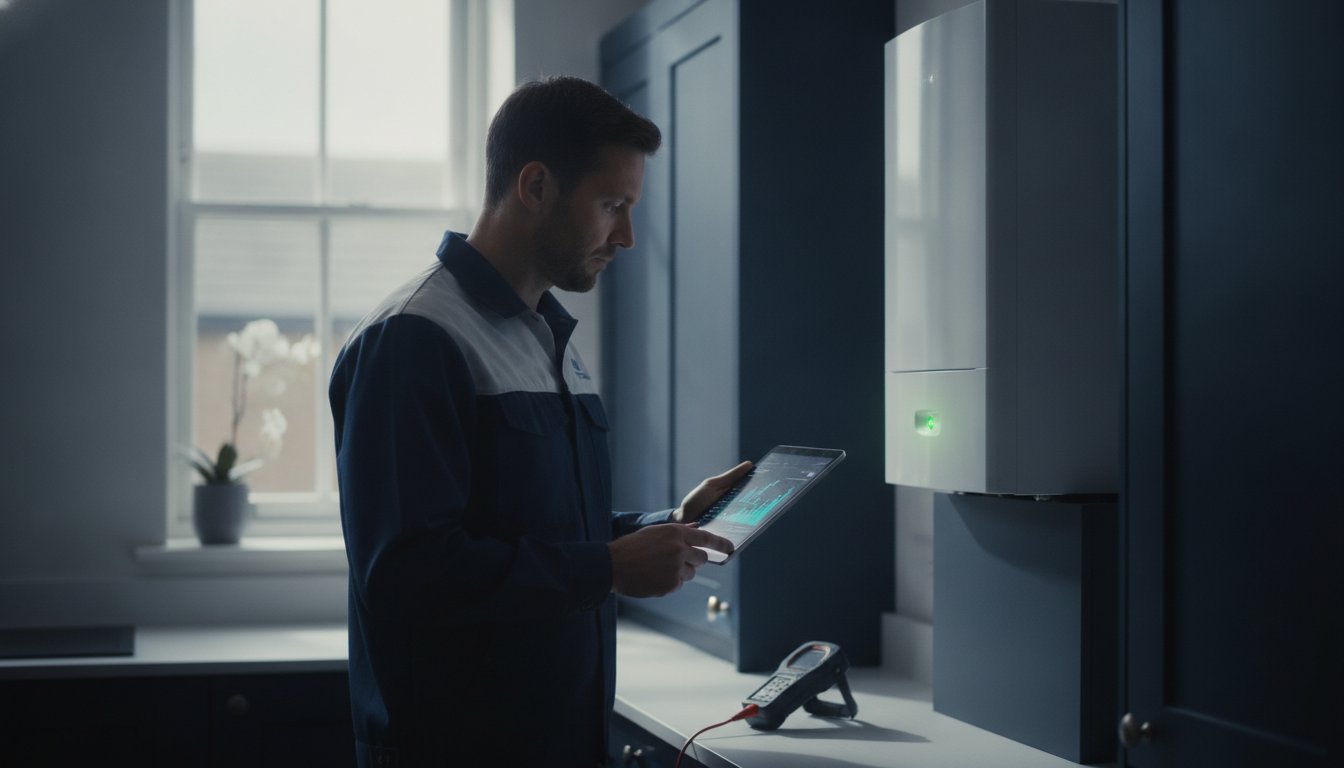
The inspection is rigorous. It follows the official gas safety record requirements to ensure no detail is missed. The engineer follows a precise sequence of tests:
- Tightness test: This checks the entire gas installation for leaks. It ensures the pipework is sound from the meter to the appliances.
- Burner pressure and gas rate: The engineer verifies the appliance is burning the correct amount of gas efficiently.
- Flue flow test: This confirms that combustion gases are escaping safely through the chimney or flue. It is the primary defence against carbon monoxide.
- Ventilation check: Appliances need a steady supply of oxygen to burn fuel safely. The engineer ensures vents are clear and appropriately sized.
After the physical checks, the engineer tests all safety devices to ensure they function during a fault. Once satisfied, they issue the CP12 record. This is usually a digital document sent to your email immediately. Review the report for any 'At Risk' (AR) or 'Immediately Dangerous' (ID) notices. An ID notice means the appliance is unsafe and must be disconnected. A valid certificate is only confirmed when the property meets all safety standards. Digital records make this easy to track, giving you a permanent, accessible history of your property's compliance.

Managing the Results: Passes, Fails, and Remedial Actions
Receiving the final report is the moment of truth. Most landlords focus purely on how to get a gas safety certificate, but the real management starts once the engineer hands over the CP12. A clean pass is the ideal outcome. It confirms your property is legally compliant for the next 12 months. However, if the report identifies issues, you must act quickly to protect your tenants and your legal standing. Compliance is not just about the document; it is about the safety behind it.
The CP12 uses specific industry codes to categorise the safety of your installation. Understanding these is vital for prioritising maintenance and avoiding unnecessary anxiety. A pragmatic approach to these codes allows you to plan your budget and schedule repairs without the stress of the unknown. Each code tells a different story about the health of your appliances.
Decoding the Safety Codes on Your CP12
The engineer will mark each appliance with a specific status. NCS (Not to Current Standards) means your system is safe to use but doesn't meet the latest building regulations. You don't need to take immediate action, whilst upgrading is advised during your next renovation. AR (At Risk) is a warning. The appliance has a fault that could become dangerous if left unaddressed. You must arrange repairs to ensure continued safety. ID (Immediately Dangerous) is a critical failure. The engineer is legally required to disconnect the appliance or the gas supply to prevent an accident. You cannot use the equipment until it is fixed.
Arranging Remedial Repairs Efficiently
If your property fails, don't panic. Efficiency is key. You need a clear plan to restore compliance without overpaying for emergency call-outs. Knowing how to get a gas safety certificate after a fail means acting fast on repairs. Always request a fixed-price quote for any remedial work. This eliminates the uncertainty of hourly rates and helps you manage your maintenance budget effectively. Once the repairs are finished, a follow-up check is necessary to issue a valid certificate.
Managing these results is a core part of your annual gas safety check routine. Keep your digital records updated to show that you have addressed all AR and ID notices promptly. This audit trail is your best defence in the event of a dispute or inspection. If your report shows a failure, you can book a boiler repair through our platform to get a vetted engineer on-site fast and resolve the issue with total transparency.
Maintaining Compliance with 11 Done
Manual compliance management is a relic of the past. It's time-consuming. It's prone to error. 11 Done simplifies the gas safety certificate landlord process by removing the friction from every step. We act as your digital partner, ensuring your property stays legal without the administrative burden. Knowing how to get a gas safety certificate is only half the battle; keeping it updated every year is where the real challenge lies. We handle the scheduling so you can focus on your property investment.
Transparency drives our service. We provide fixed-fee pricing to eliminate the uncertainty of local call-out rates or hidden commissions. You won't face unexpected surcharges for basic inspections. This clarity allows for precise budgeting across your entire portfolio. By centralising your bookings, you gain a level of control that traditional local searching simply cannot match. It's about efficiency. It's about reliability. We move you from a service need to a solution instantly.
The 11 Done Booking Advantage
Speed defines our platform. You can complete an online booking in under 60 seconds. We've already done the hard work of vetting engineers. Every professional on our network is Gas Safe registered and understands the specific needs of landlords. They provide clear, professional communication from start to finish. You receive real-time updates on your inspection status. This ensures you are never left wondering about the state of your property compliance or tenant safety.
Automated Reminders for Annual Peace of Mind
Deadlines shouldn't cause stress. We track your certificate expiry dates automatically. Our system sends early notifications, giving you ample time to organise access with your tenants. This proactive approach prevents the last-minute scramble that often leads to missed deadlines and legal exposure. You can manage multiple properties from a single, streamlined dashboard. It keeps your records organised and accessible at all times.
Digital record-keeping is the modern standard for 2026. Your CP12 certificates are stored securely in the cloud. Need to provide a copy to a new tenant or a local authority? You can access and send your documents instantly from any device. This eliminates the risk of lost paperwork. It ensures you always have the proof you need to validate your insurance or serve a legal notice. Learning how to get a gas safety certificate is simpler when the entire history of your property is just a click away.
Secure Your Property Compliance Today
Compliance is a continuous responsibility. It doesn't have to be a source of stress. By mastering the process of how to get a gas safety certificate through a streamlined, digital approach, you protect both your tenants and your investment. Effective preparation and clear communication ensure your property remains safe and legally sound. Digital records and automated tracking are the essential tools for maintaining a modern property portfolio in 2026. They remove the friction of manual paperwork and help you avoid the risk of heavy fines or missed deadlines.
We provide access to Gas Safe Registered Engineers and fixed transparent pricing to give you total peace of mind. Your digital CP12 certificates are issued fast, ensuring you stay ahead of the curve. Don't leave your property safety to chance or wait until the last minute to book your inspection. Take control of your landlord obligations with a partner that values your time and security.
Book your fixed-price Gas Safety Certificate today and experience a simpler way to manage your property. Your safety is our priority.
Frequently Asked Questions
How much does a gas safety certificate cost in the UK?
Costs vary across the country based on your property's location and the total number of appliances requiring inspection. Regional demand often dictates the base rate. You will typically find that rates are higher in London compared to the North of England. Most engineers charge a set fee for the boiler and then add an incremental amount for each additional gas fire or hob. It is a straightforward calculation based on the workload.
Can a tenant refuse access for a gas safety check?
Tenants have a right to quiet enjoyment, but they also have a responsibility to allow essential safety maintenance. You must provide at least 24 hours' notice before the visit. If a tenant refuses entry, you must show you have taken all reasonable steps to comply with the law. Keep a record of all correspondence. Persistent refusal may require legal advice to ensure you fulfil your mandatory safety duties.
How long does a gas safety inspection actually take?
Learning how to get a gas safety certificate efficiently involves understanding the time commitment on the day. A standard inspection usually takes between 30 and 60 minutes. The exact duration depends on the number of gas appliances and the complexity of the pipework. Boilers and gas fires require more detailed testing than a simple hob. Clear access to the meter and all appliances will speed up the process.
Is a boiler service the same as a gas safety check?
No, these are two distinct procedures with different goals. A gas safety check is a legal inspection to ensure appliances are safe to operate. A boiler service is a maintenance task designed to improve efficiency and prolong the life of the unit. Whilst they are often booked together to save money, a safety check alone does not count as a full service. Both are essential for property health.
What happens if I don't have a gas safety certificate for my tenants?
Failing to maintain a valid certificate leads to serious legal consequences. You could face unlimited fines or civil penalties of up to £30,000 per offence. It also invalidates your right to serve a Section 21 notice for property possession. In the worst cases, negligence can result in criminal prosecution or imprisonment. Compliance is the only way to protect your tenants and your legal standing in the rental market.
Does a gas safety certificate expire on the exact anniversary?
The certificate expires exactly 12 months after the date of issue. However, you have some flexibility. You can book the inspection up to two months before the current expiry date and still keep the original anniversary for your next renewal. This prevents you from losing days on your certificate. It is a pragmatic solution for landlords who want to avoid last-minute bookings and stay compliant throughout the year.
Can I get a gas safety certificate if I am a homeowner and not a landlord?
Homeowners often ask how to get a gas safety certificate for their own peace of mind. Whilst not a legal mandate for owner-occupiers, it is highly recommended. A professional check identifies carbon monoxide risks and verifies that your appliances are working correctly. It provides a record of maintenance that can be useful when selling your home. It is a small investment for the safety of your family.
Comments