
- 11Done
- July 02, 2026
- Safety Guides
Emergency Gas Engineer: A Pragmatic Guid...
A gas leak doesn't announce itself with a loud alarm. It starts with a subtle scent or a yellow flame where there should be blue. For most people, this triggers immediate anxiety. You worry about the safety of your family. You worry about the cost of repairs. You might even worry about calling an emergency gas engineer for something that turns out to be nothing. It's a difficult balance to strike under pressure.
Safety shouldn't be a guessing game. We'll help you identify the clear signs of a genuine emergency so you can act with certainty. This guide provides a step-by-step protocol to secure your property whilst you wait for professional help. You'll learn how to verify an engineer's credentials and understand exactly what a standard response should look like. No jargon. No hidden complications. Just the facts you need to regain control and keep your home safe.
Key Takeaways
- Spot the critical warning signs of a leak, from the distinct smell of mercaptan to physical symptoms of carbon monoxide exposure.
- Understand exactly when to call an emergency gas engineer to secure your property and protect your residents.
- Learn how to verify Gas Safe credentials instantly to ensure every professional in your home is fully qualified and vetted.
- Discover legal obligations for landlords, including the essential Gas Safety Certificate (CP12) and annual compliance requirements.
- Prepare for a professional visit by knowing exactly what atmosphere tests and safety checks an engineer should perform upon arrival.
What is an Emergency Gas Engineer?
An emergency gas engineer is a specialist. They are specifically qualified to manage gas appliances and supply lines under pressure. This role is distinct from a general plumber. While a plumber manages water systems, a gas engineer handles combustible fuels and complex ventilation. Their primary objective is risk mitigation. They arrive to stabilise dangerous environments, ensuring your property is safe before any complex repairs begin. This requires a unique set of certifications and a pragmatic approach to problem-solving. They are the frontline of home safety. They don't just fix leaks; they prevent disasters. Every action they take is designed to eliminate the threat of fire, explosion, or poisoning. It is a high-stakes profession that demands precision and immediate action.
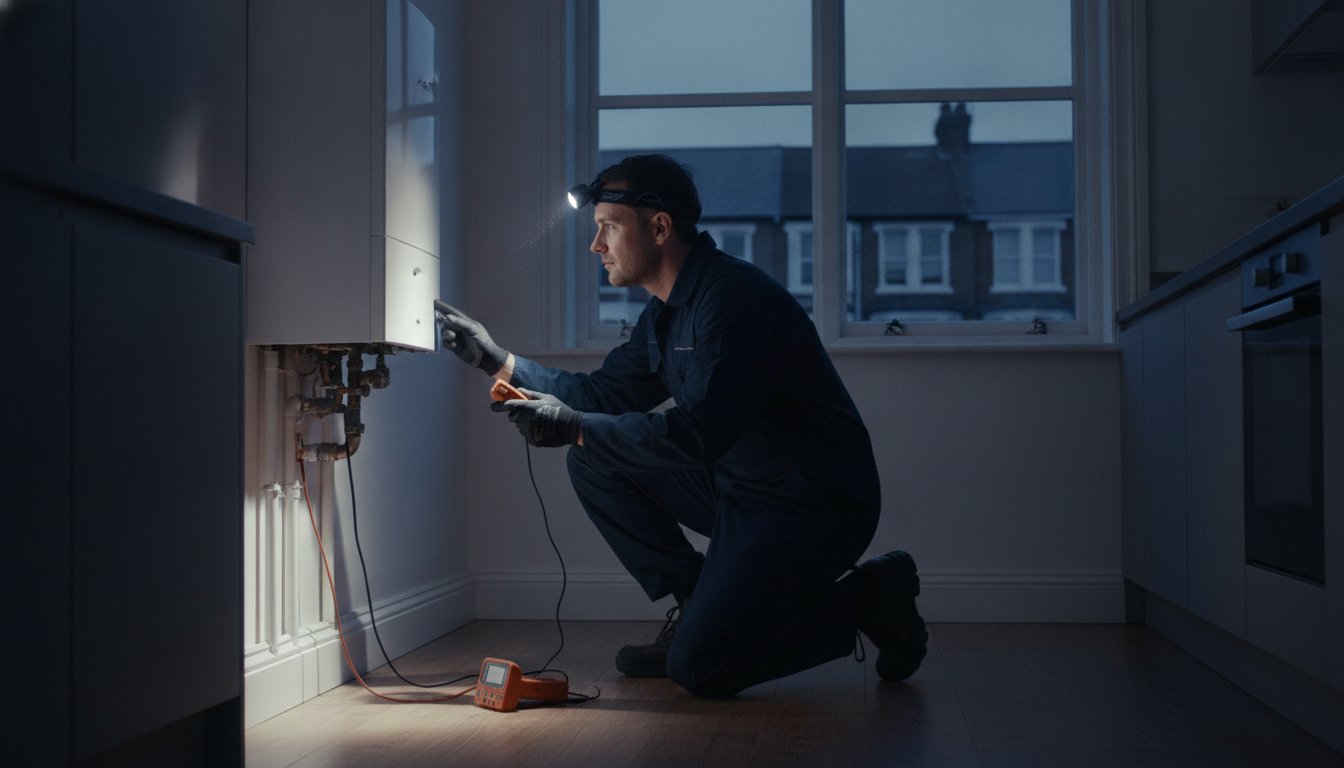
These professionals are trained to think fast. When they enter a property, they aren't just looking at a broken boiler. They are assessing the entire atmosphere. They check for ventilation issues, improper flue installations, and signs of incomplete combustion. Their toolkit includes calibrated electronic leak detectors and manometers to measure gas pressure. A plumber might have a wrench; an emergency gas engineer has a suite of diagnostic safety equipment. This expertise allows them to isolate a fault within minutes, providing the quiet confidence you need during a household crisis.
Gas Safe Registration: The Non-Negotiable Standard
UK law dictates that gas safety is governed by strict regulations. It is a criminal offence for anyone to perform gas work if they aren't on the Gas Safe Register. This official list ensures every professional has the required training to prevent accidents. Every legitimate engineer carries a physical ID card. You must verify the photo and expiry date. The back of the card lists specific competencies, such as domestic boilers or cookers. If the appliance isn't listed, they cannot legally touch it. Always check these details before work begins to ensure your insurance remains valid and your home stays safe.
Network Engineers vs. Private Engineers
Understanding who to call is vital. The National Gas Emergency Service manages the network and meters. They stop leaks but rarely perform internal repairs. Their job is to make the area safe, which often involves capping your supply. A private emergency gas engineer handles everything inside the property. They fix boilers, replace faulty internal pipework, and restore your heating. Platforms like 11done.co.uk connect you with these vetted specialists. They bridge the gap between a capped meter and a fully functional, safe home, ensuring repairs are permanent and compliant.
When to Call an Emergency Gas Engineer: Identifying the Signs
Speed saves lives. Identifying a gas leak before it escalates is vital for property safety. You shouldn't wait for a total system failure to take action. Whilst some signs are obvious, others are subtle. Recognising these indicators allows you to act with quiet confidence. If you suspect a problem, calling an emergency gas engineer is the only pragmatic choice. Don't second-guess your safety. Trust your instincts and the physical evidence in your home.
While securing your property is the immediate priority, ensuring the continued wellbeing of your household is just as important. For those looking to maintain a proactive eye on their physical condition, Ready Health provides advanced health monitoring solutions and checks to give you ongoing peace of mind.
- The "Rotten Egg" Smell: Natural gas is naturally odourless. Suppliers add a chemical called mercaptan to give it a distinct, pungent scent. If you smell this inside or outside your home, evacuate immediately.
- Physical Symptoms: Are residents experiencing unexplained headaches, nausea, or dizziness? These symptoms amongst residents often improve once they leave the property. This is a major red flag for gas exposure.
- Audible Hissing: A leak under pressure often makes a faint hissing or whistling sound. Check near your gas meter or internal pipework if you hear unusual noises.
- Ignition Failure: A boiler that refuses to light or a sudden drop in gas pressure suggests a supply issue or a dangerous internal fault.
Early detection prevents catastrophe. If you are unsure about a specific symptom or appliance behaviour, it is always safer to get professional advice quickly. A qualified emergency gas engineer can provide an immediate assessment to secure your home.
The Silent Threat: Carbon Monoxide Awareness
Carbon monoxide (CO) is a colourless, odourless, and tasteless gas. You cannot see it. You cannot smell it. It is a silent killer that enters the bloodstream and replaces oxygen. Carbon monoxide is a byproduct of incomplete combustion that requires immediate engineering intervention. Every home needs a functional CO alarm. If yours sounds, do not stay to investigate. Open the windows, leave the building, and call for help. Understanding Landlords' responsibility for gas safety is particularly important for tenants. Property owners must ensure these alarms are present and appliances are regularly checked.
Appliance Warning Signs and Behaviour
Your appliances speak to you through visual cues. A healthy gas flame is crisp and blue. If you see a yellow or "lazy" orange flame, the gas isn't burning correctly. This often leads to the production of carbon monoxide. Look for soot marks, dark scorching, or heavy brown staining on the outside of your boiler or gas fire. These marks indicate a blocked flue or inadequate ventilation. Excessive condensation on windows in the room where the appliance is located is another common warning sign. Don't dismiss these as minor maintenance issues. They are indicators of a system that is failing to operate safely.
What Happens During an Emergency Gas Visit?
Professionalism begins at the doorstep. When an emergency gas engineer arrives, their first action is to present their Gas Safe ID. You must verify this. It ensures the person entering your home is legally permitted to handle the situation. Once inside, the engineer works with methodical speed. They aren't there to chat; they are there to secure the environment. They use calibrated detection equipment to sample the air for combustible gases. This initial sweep determines the level of risk and dictates the next steps of the response.
Isolation is the standard protocol if a leak is detected. The engineer will turn off the gas supply at the primary meter. This simple act immediately removes the risk of fire or explosion. With the supply capped, they begin a systematic search. They test appliances, pipework, and joints to find the exact breach. This is a logical process of elimination designed to find the fault quickly. They won't leave until the source of the danger is identified and the property is stabilised. No guesswork. Just pragmatic safety measures.
The Diagnostic Process
The engineer uses a "tightness test" to verify the integrity of your entire gas system. They attach a manometer to the test point and monitor for any pressure drop. If the pressure holds, the pipework is sound. They also perform visual inspections of all flues and ventilation bricks. Obstructions here can be fatal. Finally, electronic flue gas analysis checks the combustion levels of your boiler. This ensures that the unit is burning fuel safely and not releasing carbon monoxide into your living space. These tests provide the data needed to make informed safety decisions.
Safety Notices and Documentation
Transparency is key to safety. If a fault is found, the engineer will issue a formal notice. Under the Gas Safety (Installation and Use) Regulations 1998, they are legally bound to classify risks accurately. "Immediately Dangerous" (ID) appliances are disconnected and capped off instantly. "At Risk" (AR) faults mean the appliance is unsafe and should not be used until repaired. You will receive a detailed written report of all findings and actions taken. This document is essential for ensuring your landlord compliance and provides a clear record for future maintenance or insurance claims.

Gas Safety Compliance and Landlord Obligations
Compliance is binary. You are either legal or you are not. For landlords, gas safety is a primary legal responsibility that cannot be delegated or ignored. The law is clear. You must provide a safe environment for your tenants. This starts with an annual check of all gas appliances and flues. An emergency gas engineer often acts as a secondary line of defence here. During a crisis call-out, they don't just fix the leak. They assess the overall safety of the installation. If they find outdated equipment or a lack of maintenance, they must report it. This often reveals non-compliance before the authorities do. It's a pragmatic reality of the trade.
Maintenance extends beyond the boiler. Landlords are responsible for the entire gas infrastructure. This includes internal pipework and chimneys. Blocked flues are a common cause of carbon monoxide incidents. You must ensure these are clear and functional at all times. Record-keeping is equally vital. You are legally required to keep copies of every safety check for at least two years. This provides a paper trail of your commitment to safety. It protects you in the event of a dispute or an incident. Without these records, proving compliance is nearly impossible. Efficiency in record-keeping prevents legal friction later.
The CP12 Certificate: More Than Just a Check
The CP12 is your primary proof of safety. It is a detailed record of every appliance's health. When an emergency gas engineer performs a significant repair, the previous certificate may become void. A new check is often necessary to confirm the system is safe to use again. This ensures your documentation matches the current state of the property. For a deeper look at these requirements, see our Gas Safety Certificate Landlord Guide 2026. Stay informed. Stay compliant.
Tenant Safety and Emergency Access
Communication is a safety tool. Landlords must provide tenants with 24-hour emergency contact information. Tenants need to know who to call the moment they smell gas. If a safety-critical repair is needed, you have legal rights regarding emergency access. You don't need 24 hours' notice if there is an immediate risk of fire or explosion. Safety overrides standard notice periods. To understand how this fits into your broader obligations, read our Gas and Electrical Safety Check Guide. If you need to arrange a safety check or urgent repair, book a qualified engineer today to secure your property instantly.
Finding a Reliable Gas Engineer: The 11 Done Approach
Finding an emergency gas engineer shouldn't be a gamble. In a crisis, you don't have time to cross-reference reviews or verify IDs manually. You need a solution that is already prepared. 11 Done provides that structure. We focus on speed. We focus on transparency. Every engineer on our platform is already vetted. This removes the friction from a high-stress situation. You get a professional who knows the regulations and respects your time. It is a modern solution for an age-old problem. Efficiency is safety.
Consistency is key. Whether you are in London or Manchester, the standard remains the same. A national platform ensures that safety protocols are followed strictly. No "cowboy" engineers. No hidden complications. We use a fixed-price model for our core services. This eliminates the anxiety of escalating costs during an emergency call-out. You know the framework before the work begins. It is a logical, streamlined approach to home maintenance. We act as the bridge between the consumer and the professional, handling the difficult work of verification so you don't have to.
Why Efficiency Matters in Gas Emergencies
Every minute counts. 11 Done organises rapid responses to prevent situation escalation. A small leak can become a major incident if left unaddressed. Our approach to emergency boiler repairs is no-nonsense. We don't waste time with unnecessary filler. We get the right professional to your door as quickly as possible. This provides the quiet confidence that your property is being handled by an expert. You can breathe easier knowing the vetting is already done. We value your time. We value your safety. Our system is designed to bring order to potentially chaotic situations instantly.
Beyond the Emergency: Long-Term Maintenance
Prevention is the best strategy. Emergency call-outs are often the result of neglected maintenance. Regular boiler servicing identifies small issues before they become dangerous leaks. A worn seal or a faulty sensor is easy to fix during a scheduled visit. It is much harder to manage at midnight. Regular inspections ensure your system remains efficient and compliant. It keeps your warranty valid and your energy bills lower. Don't wait for a breakdown to take action. Proactive maintenance is the hallmark of a responsible property owner. Book your Gas Safe inspection with 11 Done today and secure your home for the future.
Secure Your Property with Confidence
Safety is a choice. It isn't a matter of luck. Knowing the warning signs and knowing when to call an emergency gas engineer provides the control you need during a crisis. You now have the tools to identify hazards. You can verify professional credentials. You can manage your legal obligations with ease. You understand the difference between network issues and internal faults. You know exactly what happens during a professional visit. Efficiency matters. Transparency matters. Following a clear safety protocol eliminates friction. It protects your home and your residents.
Reliability is essential. We provide access to only Gas Safe registered engineers across the country. We offer national coverage for landlords and homeowners alike. Our transparent, fixed pricing for compliance checks removes the anxiety of hidden costs. Don't let a minor fault become a major disaster through hesitation. Take a proactive approach to your property maintenance. It is the most pragmatic way to ensure long-term safety and peace of mind. Your home deserves professional care.
Just as you invest in gas safety for your property, you might also explore Insurance Approved Vehicle Trackers from Safe & Sound Mobile to ensure your transport remains secure and compliant with your insurer's requirements.
Get your Gas Safety Certificate or Emergency Repair sorted with 11 Done for a professional, no-nonsense service that puts your safety first.
Frequently Asked Questions
Is a gas engineer the same as a plumber?
No, these are distinct roles with different legal requirements. A plumber manages water systems, such as taps, toilets, and drainage. A gas engineer is a specialist qualified to work on combustible fuels and gas-fired appliances. This distinction is vital across all trades; for instance, while gas safety is paramount, homeowners in regions like Western Australia also rely on dedicated specialists such as Inlightec Electrical Solutions for their residential and commercial electrical requirements. Whilst some professionals hold both qualifications, anyone working on your gas supply must be registered on the Gas Safe Register by law.
What should I do immediately if I smell gas in my home?
Evacuate the property immediately and don't use any electrical switches, matches, or phones inside. Open windows and doors to ventilate the area if it is safe to do so. Turn off the gas supply at the meter if you know how. Once outside, call the National Gas Emergency Service. Do not re-enter the building until a professional confirms it is safe.
How much does an emergency gas engineer typically cost in the UK?
Costs vary depending on your location, the time of day, and the complexity of the fault. Emergency call-out fees are generally higher than standard maintenance rates to account for the rapid response required. Using a platform with a transparent, fixed-price model is the best way to avoid unexpected costs. Always confirm the pricing structure before the engineer begins work on your property.
Can I check if an engineer is Gas Safe registered myself?
Yes, you can and should verify this before work begins. Visit the official Gas Safe Register website and search using the engineer's seven-digit licence number. When the professional arrives, ask to see their physical ID card. Check the expiry date on the front and look at the back to ensure they are qualified for the specific appliance needing repair.
What happens if my gas is turned off for safety reasons?
The engineer will cap the supply at the meter to eliminate immediate danger. You must not attempt to turn the gas back on yourself. A qualified professional must first locate and repair the leak or fault. They will then perform a "tightness test" to ensure the entire system is secure before restoring the supply to your appliances.
Do I need a new Gas Safety Certificate after an emergency repair?
A new certificate is strongly recommended to ensure your records are accurate. Major repairs can change the safety status of your installation, so a fresh check confirms the system is fully compliant. For landlords, this documentation is essential for legal protection. It proves the property was left in a safe condition following the emergency intervention.
How long does an emergency gas engineer take to arrive?
Arrival times depend on your specific location and the current demand for services. An emergency gas engineer prioritises rapid arrival to mitigate risks like leaks or carbon monoxide exposure. Using an organised platform helps streamline this process. It connects you with vetted professionals in your area quickly, reducing the time you spend waiting in a stressful situation.
Is a landlord responsible for gas leaks in a rental property?
Yes, landlords have a legal duty to maintain all gas pipework, appliances, and flues they provide. They must ensure the property meets all safety standards set out in UK law. This includes arranging an annual gas safety check and responding to reported leaks instantly. Tenants are generally responsible for the safety of any gas appliances they own and have brought into the property.
Comments